Thursday, May 31, 2012

Meet you my good friends at the battle front


They all came in with the usual feeling; they always can’t hide the feeling of uncertainty. Some were teenagers, others were pregnant mothers, and others were adults that did not come with their spouses. I was really impressed with some few clients that came in as couples. Anyways, to face the truth, HIV is such a nightmare. While I assisted with the HIV testing and counseling services at Kasonga health center last week, I was glad that all the twenty plus clients we tested were negative. Voluntary counseling and testing (VCT) services have been impressive in the fight against HIV/AIDS in Uganda. In fact, linking HIV patients to quality care and treatment services has been a major attribute by VCT program and this factor is an important consideration for more clients to seek these services according to F.Nuwaha et.al., (2002). Early this month, using the data collected and stored in the health centers’ VCT record books, I conducted an analysis to find out if there are any things to improve about the program. I analyzed a data sample of 1,177 clients from those had come to test for HIV between 2011 and May 2012. I generated a snap shot of the sex, age and sero type composition of VCT clients in Kyangwali refugee settlement. This was to address the 3 broad questions in mind which were to do with; the extent to which the VCT services are being utilized, the groups of clients that seem to be at greater risk or vulnerability, and on which initiatives to strengthen or introduce within the HIV prevention, care and treatment program. 

Much as the general HIV burden among these clients was low (2.89%), it was quite sad that the vibrant young age group of clients between 19-30 years contributed nearly half of this burden. In fact, out of 743 VCT clients that were in the age bracket of 1 to 30 years, 20 of them (2.69%) were found HIV positive. Younger people are increasingly succumbing to the HIV pandemic. I bitterly remember my eyes falling upon many 18s, 19s and 20s in the age columns while I randomly viewed ART clinic records at Kituti health center. Is it not worrisome that HIV is soon pitching its tent among the younger generation? Besides the sexual transmission route, Mother to Child Transmission (MTCT) has registered its spot with nearly 22% contribution to 100,000 new annual infections in Uganda according to Uganda Aids Commission (UAC). MTCT could be explanatory for the 4.7% age specific HIV rate among the 42 VCT clients that were 10 years and below from my study. 

It is really saddening to imagine how many dreams, energy, talent, skills… (list endless) are at stake due to the HIV scourge. In fact, the Modes of Transmission study predicts more new infections to occur among the persons in mutually monogamous relations that are in the age bracket of 15-49 years. The impact on general health and development of our communities is really immense. I remember reading somewhere that in the early 1980s, when this new HIV scourge had hit Uganda, the government had resorted to ‘burying head in sand’, shying away from spreading the ugly truth on HIV transmission as being majorly by sexual intercourse. However, when the new government came out openly and strong on mass awareness on HIV, we saw prevalence and case fatality rates dropping tremendously.

While reflecting on my role in addressing HIV, especially among the young generations, I appreciated the fact that the fight starts with me. The “True Manhood” campaign puts it right, ‘Be in charge of your life by protecting yourself and your partner from HIV.’ I was then proud and happy with my current work experiences of serving communities to protect and better their lives with the fight against HIV being priority in many of interventions. I however need to up this game by doing much more in reaching out to communities, friends and strangers through various channels. Living an exemplary life is definitely topping my list of planned action. I pause with a global call upon everybody to join the fight against the HIV pandemic. Endowed with a vast friends’ network on my facebook account, I take this opportunity to post the True Manhood campaign message, ‘Be in charge of your life by protecting yourself and your partner from HIV’. I hope to meet you my good friends at the battle front!

Monday, May 7, 2012

Malnutrition; a wild beast trying to cross their compounds


Early this month, I had a random visit to the therapeutic center in Kituti Health center in Kyangwali. This is one of the clinical initiatives in place to curb the malnutrition that has remained a problem in the refugee settlement and as well in the hosting communities. The clinical services have however not been my biggest focus while working in the settlement. Certainly, it is not just about the phobia that I at times develop while in a hospital facility but I guess it just has to do more with my interest and training in  preventive community centered approaches. To give you a snap shot of the malnutrition burden in Uganda, over 38 percent of children below 5 years of age are stunted while over 22 percent are underweight for their age (UNFS, 2003)! There is a possibility that at times such figures on paper paint a blurred picture until you meet a severely malnourished child. On that day at the health center, I happened to meet some child patients admitted for severe malnutrition. This boy looked so pale and was as thin as un-imaginable. The other had third degree oedema (swollen from foot to face) and rash all over the body. You would not want to imagine what these patients looked like a few days earlier based on the news from the health worker that they had tremendously improved by the time of my visit!


Surprisingly, the refugee settlement and surrounding communities are endowed with fertile soils and favourable rains throughout the year. More interesting is that Kyangwali is the food basket of the Bunyoro region and beyond. Driving through the refugee settlement, you will witness green fields of maize, beans and other crops! So there comes the great question, “where is the malnutrition problem coming from then?”  There have always been talks on pre-assumptions and various factors that have been attributed to this situation in the settlement. Many interventions are in place to put the condition in proper shape. Some of these include; seed distributions, case management through therapeutic and supplementary feeding program, growth monitoring, food preparation demos, and sensitizations. However, case management has become a main focus area among the interventions. In my view, the challenge still lays with the failure to justify these pre-assumed factors and major contributors to the poor nutrition among these communities. Doing this would help in identifying what interventions to prioritize where, how, and when. I often get worried that case management could become an ‘in and out cycle’ that may fail to realize case reductions in a longer run.  Malnutrition is like a wild beast on the loose that one has to kill before crossing in to his compound.

Well, upon this backdrop, we are already in the process of running an assessment in the communities to have a clearer picture on the common contributors to the problem with in the refugee settlement. We tried making this survey custom-tailored to the households that have faced malnutrition issues. I know you will not ask about how we identified the households since you can guess that we have records of clients in the supplementary and therapeutic feeding programs. Since I am not defending a research thesis, I will not over emphasize the criteria, but truth be told, we tried making the assessment very basic and user friendly for even a community health worker to administer. We are hence looking forward to our findings by the end of May and then we shall hopefully work more smoothly in assisting the communities conquer the wild beast.

Thursday, April 19, 2012

Are you part of the change you are causing!


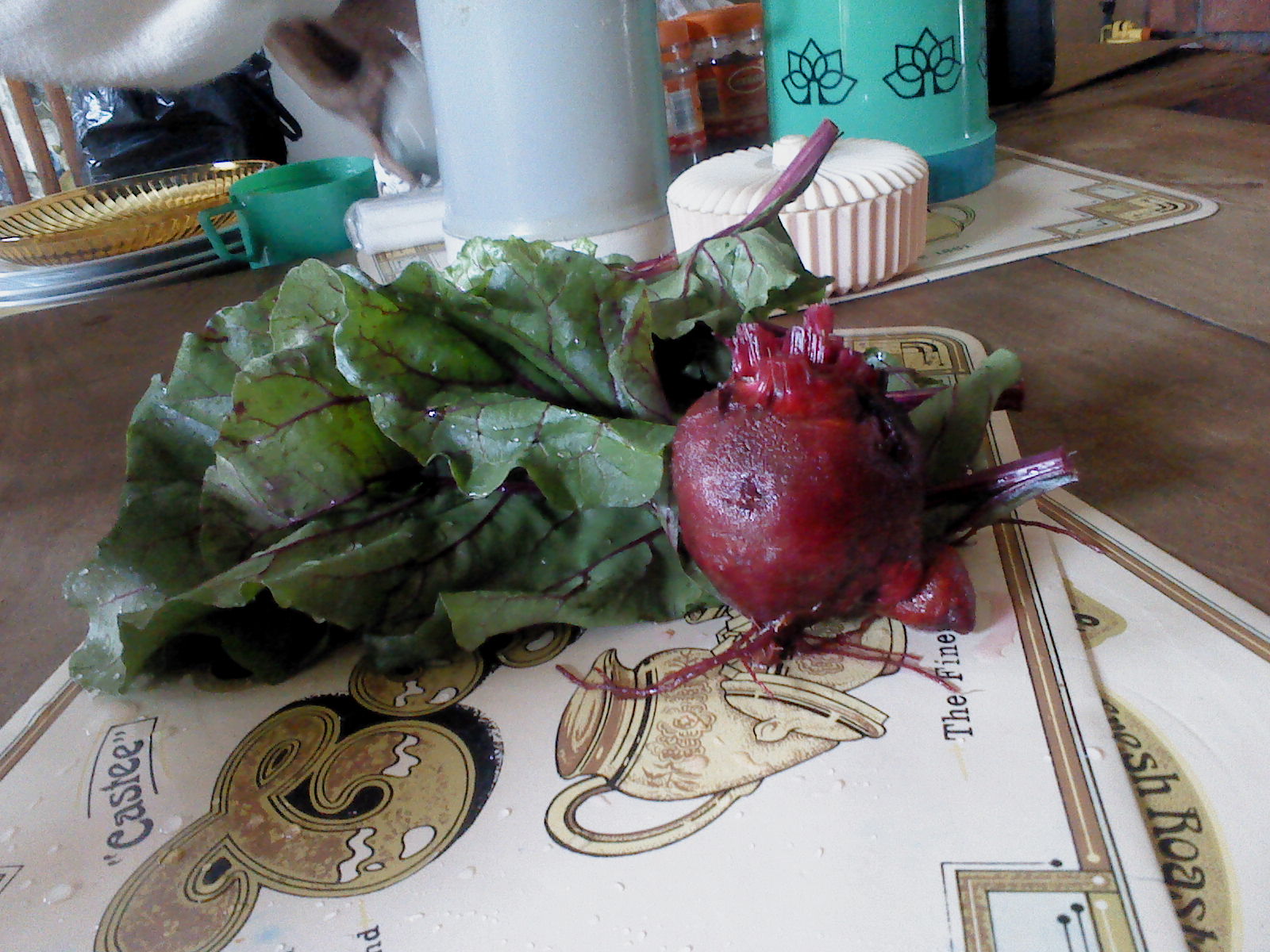
Many a times have health professionals preached water and drank wine. With this, I imply the infamous notion of “do as I say not as I do!” I was nearly victim to this vice over the beet root project. While I read about the great dietetic values of beet root, I got the idea that it will be a viable and incredible project that would help avert the nutrition insecurity in the refugee settlement. I had as well heard stories and testimonies of the wonders of this tuber. Much as I was excited and optimistic about this new innovation, I couldn’t stop thinking about why I should not introduce beet root to my home too. First, I definitely had to figure out where I would purchase the seeds and then learn how to plant, harvest and prepare this delicacy. The journey began when I purchased a tin of seeds from one farm supply store in my home town in Masaka during the Christmas festive season. I then had to prepare a seed bed but had to leave it under the care of my parents while I returned to work. I had to learn more about how the preparation of this tuber for consumption is done. Actually, this ‘home project’ was yet to become an experiment ,I guess this is what they call action research. Story cut short, after 3 months when I returned home for the Easter holiday, guess what I found! I had to commend my parents for the great farming expertise they portrayed on this project work. I could not hide the excitement when I saw the green flourishing vegetable garden from a distance. Every inch I got closer to the beetroot garden, the wider my smile grew. That was my first ever moment to see live beetroot plants.

On Easter, we harvested 2 beets to experiment with them! We however woke up to the reality that our home blender had gotten damaged, the blending of the beets had to be mechanical. We trimmed the tuber in to smaller hand-crushable pieces and did it great service. This made a tasty deep-red coloured passion fruit-pineapple- beet cocktail. I am serious to say that even the last drop of that cocktail was drank; for it was the best juice we had ever had in decades. We obviously steamed the beet foliage after trimming it in smaller pieces. It was super-tasty! By the time I left home, no juice went without a beet punch! I had labored to inform my entire family about the values that come with the consumption of beet root and left everyone dumbfounded by the wonders of this plant. 

I am so happy that I have helped my family live the change I want to see in other people’s families. I guess it really is fulfilling to support and promote the change you are implementing by as well being part of it or lest you will “preach water and drink wine.”    

Wednesday, March 21, 2012

The beauty of unconditional service


Hearing impairment seemed to me of less public health importance till I had the opportunity of working with the team from Starkey Hearing Foundation for a few days during their outreaches in Gulu and Kampala districts this March 2012. Besides meeting some “deaf” kids from deaf school at my local church, I had just met a few of the kind elsewhere!
Definitely, it was really exciting that I was to take part in this new experience of fixing hearing aids and getting to know how the whole system works. In fact, on that Friday 9th, I was amazed seeing such a big number of people scattered around the URA parking lot waiting to be fixed. It was a mix of age groups ranging from as young as one year to elderly people. My mind could not help wondering if there has been any researches conducted to establish the magnitude of this problem in Uganda. Beyond my imagination of such an awesome topic for my postgraduate research, I really felt the enthusiasm of impacting these people’s lives. You really want to think for a moment how beautiful it is for one that has never heard but watched people’s lips move up and down, seen people dancing to what he or she cannot hearat last having the  hope and ability to enjoy life to the fullest!
Well, it turned out a great experience helping out at the counseling department (this is where the client gets to learn how to clean, maintain, properly use, fix new batteries and other issues of interest concerning the hearing devices) and latter at the department that did the real fixing of the device. While interacting with John, one of the experts from the Starkey Hearing Foundation, I was informed that not all kids that are in “deaf” school or even other people we see “deaf” are really deaf. Some people’s impairment is not that serious to render them completely deaf! In fact, there were some kids from “deaf” school that we fixed with the weakest hearing devices and were able to hear clearly- imagine they have been regarded as complete “deaf” and yet they are not. Such situations are still prevailing in Uganda and most likely other developing countries due to the inexistence or low coverage of such services to assist people with hearing problems. Poverty as manifested by low household incomes and inadequate government/private sector investments in healthcare services is still a big deal.
One of my most humbling moments was while in the counseling department on my first day of the outreach. Meeting and interacting with people I “didn’t know” seemed a hectic process especially that one had to talk almost the same words over again. I however enjoyed the excitement I saw on people’s faces when they felt confident and comfortable that they would ably use the hearing devices and how amazing it was that they would now hear clearer or completely perfect. One lady who seemed overwhelmed by my great service and by the newly acquired device happened to be through with the counseling session and ready to leave for home. Out of curiosity, I asked where she stayed! The name of the district (Masaka-my home district too) was a very familiar one. So I asked her where exactly she stays in Masaka and to my surprise, it was a 5 minute walk from my parents’ house. She drove the point home when I learnt from her that she attends to the same local church with my mum and knew her to the dot! While she bid farewell, she told me that in two days’ time, she would be telling my mum what an amazing son she has!
There has not been a moment when I stop asking myself what service matters to me. But there are always moments when I feel that it’s all about the satisfaction that comes when you see people love and appreciate what you do. But I do not fall for this feeling completely; because I know of moments, places and people where good service is never appreciated. I am starting to believe that service is what you enjoy doing, and that has a positive impact on people’s lives (regardless if they recognize that or not). It soon bears fruit in your life too, that is what we usually see inform of remuneration, promotions, friendships, networks, love, reputation…
I warmly appreciate and thank all those involved in providing good service to people around them. May your work bear good fruit.

Monday, February 27, 2012

What was your Valentine’s Day like?


Just like some other days that pass by without you really reflecting much about them; I guess this is an ideal description of my 14th February 2012. However, I latter found out that it was indeed a ‘special’ day. On a cool Saturday at the ice cream parlour in Kampala, just about one and a half weeks after the Valentine’s Day, I had this sort of lovely meet up with “her” but I would rather you don’t confuse it for a date!  So in the middle of our chat, that question popped up! (So how was your Valentine’s Day?)
My mind quickly re-winded! I don’t have the right explanation as to why I was clad in my red t-shirt and black pair of trousers that morning. But I guess it was just the next set of clothes in line from my wardrobe, as it seems to be my method of choice for a day’s dress code. Of course everybody thought it was my jubilation style for a Valentines special! Much as I had a cold and fever, that day happened to be wonderful. It was one of the days for the Adolescent friendly clinic outreaches. This was a program that was planned to cover all the schools in Kyangwali refugee settlement. The target was for pupils aged 13 and above in the primary schools; meaning that the higher classes of P.5 to P.7 were enrolled for the program. In the secondary schools that happen to be only one in the settlement, all the students were targeted. Among the services we provided that day at Rwenyawawa primary school were; availing deworming tablets for the entire school, providing information materials (in form of exercise books with printed health messaged), holding talks on HIV/AIDS, Child rights, Reproductive health, Sanitation and hygiene with all the adolescents. We latter on screened the adolescent girls who were given a month long dose of Iron tablets (Ferrous sulphate and folic acid tablets), screened for pregnancy and were as well administered Tetanus Toxoid vaccine. The day was lovely as we chatted with these young boys and girls about various topics and their participation was wonderful! They raised their concerns, beliefs, fears and inquiries that we strongly believe are signs of advancement towards the behavior change process. I keenly noticed that this young generation is fairly informed on issues like HIV/AIDS, sexual behavior and other topics that we at times assume are unknown to them or at times we just fear to interact with them about. I guess that was partly an eye opener about sustainable and youth friendly services that can help to address and check on some health concerns in our communities. Protecting the “so far less affected but certainly highly at risk” populations really stood out for me on Valentines Day. It was such a perfect day to further my commitment towards the fight against the HIV/AIDS scourge in addition to other health and social burdens in the developing world and the globe at large! hygiene promotion T-shirt and
Of course I could not help playing some romantic Mariah Carey, Celline Dion, Corrs, Lionel Riche and West Life jams as we headed back to the field office in the van. For it was a romantic day spent purposefully!

Tuesday, January 31, 2012

The reality of impoverished communities


I come from Africa, specifically from Uganda. I have heard and been part of the impoverished communities for a long time but had not imagined how hard it has hit some communities. It is such a challenge to adopt and comfortably fit in to this life’s realities especially in the refugee communities that I work amongst lately! It really troubles a big deal to be approached by a refugee in great need of help that you are not in position to render. It is one thing that you cannot do much but it is another tragedy when you cannot even speak the language and so this person thinks that you are a remorseless being walking the earth! This is hard to stand if you really value compassion and generosity like I do.
I chose to work in Kyangwali refugee settlement with an aim of learning and contributing more resourcefully to the marginalized and livelihood challenged communities especially in promoting access to better health. I felt that I had spent some time working at my desk in my former work place and reading lots of information about hard-hit communities and so it was time to experience all that “theoretical stuff.” Early that year, I had had a workshop in Kenya where I met some friends working in a refugee settlement in Sudan and on many occasions, we interacted about our experiences and I felt like I really needed an opportunity to work with refugee communities. I surely recall that afternoon that I opened my email to find that I was offered an opportunity by the Global Health Corps to work as a Health Officer at Action Africa Help in Kyangwali refugee settlement.
Much as it is difficult witnessing misery every day of the week, I feel that I am finding more reason for devoting my time for others. I feel more resourceful and challenged to improve my skills especially the critical analytical capabilities so as to have a deeper reaching contribution to such livelihood challenged communities. I have learnt to appreciate the role of creativity and innovation in approaching our day to day challenges. Sticking to doable, simple and adoptable approaches could address many community challenges deeper than we imagined only if we worked as a team and tapped in to the available local resources and talent that are possessed by the people that we serve. 

Thursday, December 15, 2011

That one question I am always asked


It is on many occasions that friends and new people I meet ask me that one question- what is life in a refugee settlement like? Actually, some have modified the question to assess my expectations versus experience of the refugee communities. To be honest, I had a rough picture of the environment and general way of life in a refugee settlement until my current GHC fellowship placement in Kyangwali refugee settlement, Hoima district in Uganda. I could imagine thousands of barely dressed miserable people lining up at a UN food store for the next day’s meal. A long queue of patients at a small clinic or at a bore hole collecting water, the crowded run-down shelters- all these I pictured in my mind. But thanks to my organization’s (Action Africa Help- International) reports and publications I read before traveling to my work station. My opinion and expectations were further biased on my first trip to the settlement by the bumpy and muddy road network of 96 kilometers from Hoima town. My first morning in the settlement began the road map to my current experiences.
I won’t say this is a land of milk and honey but it is quite a peaceful and conducive place for work and settlement. The major economic activity is farming and you will not miss the maize, rice and beans plantations plus the vast vegetation cover. Business in farm produce is booming plus other ordinary shops and eating houses not forgetting the bars in the trading centers of the settlement. People are settled in fairly modest housing with some exceptions obviously. In fact, on any ordinary day, you will be able to meet friendly smartly dressed, healthy men, women and children. We have three health centers in the settlement and one out of the settlement but accessible by the refugees! There are various water sources, solar and generator power at the offices, staff residences and some other facilities. “That sounds like a modest living and working environment in my opinion-” is my usual response to the question after all the explanation.

Doesn’t my response to that question I am always asked seem to over shadow the concerns and inadequacies in this kind of environment? I make it a point to explain the missing bits. Health in the settlement is still a great challenge attributable to inadequate resources and supplies, low household incomes and various behavioural and social dynamics to mention but a few. It is not a rare occurrence for children to fall sick or die of preventable illnesses like malaria, anaemia, nutritional complications, diarrhea, worms and others. In fact my imagination of the long queues at the health centers and during health outreaches stands valid! Women and children continue to be more at risk and actually affected. Poverty still bites hard amidst gender-based violence, psychological trauma, HIV/AIDS, poor sanitation, environmental degradation, child headed and single parenthood families and others. 
The prevailing challenges and inadequacies are however not meant to underestimate the tireless efforts of the actors in Kyangwali refugee settlement and other similar environments. I have assessed data and information and heard stories that tell of how far worse Kyangwali settlement has come from to meet its current standards though much is still desired. It is at this brink that I show thumbs up to all humanitarian aid workers and all activists of health equity and social justice. I am indebted to GHC for making me realize and stand up for this cause. The journey is still long but we have to carry on. My biggest experience at the moment is that, “Every effort counts.”